

- Formula 1 will return to Africa for the first time since 1993 after securing a ten-year agreement to stage a new Grand Prix in Rwanda from the early 2030s.
- A purpose-built FIA Grade 1 circuit in Bugesera, approximately 40 kilometres south of Kigali, will feature significant elevation changes and a layout designed to encourage competitive racing.
- While Rwanda’s selection represents a historic milestone for Formula 1’s global expansion, concerns surrounding human rights, regional conflict and sportswashing have raised questions about the partnership.
Formula 1 will make its long-awaited return to the African continent for the first time since 1993, following confirmation of a landmark ten-year agreement to stage a new Grand Prix in Rwanda from the early 2030s.
Ending more than three decades of absence from Africa, the agreement will see the East African nation become the latest addition to the Formula 1 calendar – with a purpose-built circuit to be constructed in Bugesera, approximately 40 kilometres south of the capital Kigali.
The announcement marks a significant milestone in Formula 1’s continued global expansion under Liberty Media ownership, having long sought to re-establish a presence on the continent which last hosted a world championship race at Kyalami in South Africa.
While an exact date for the inaugural African Grand Prix has yet to be confirmed, the ten-year deal will commence once construction of the new circuit has been completed, with the early 2030s being targeted.
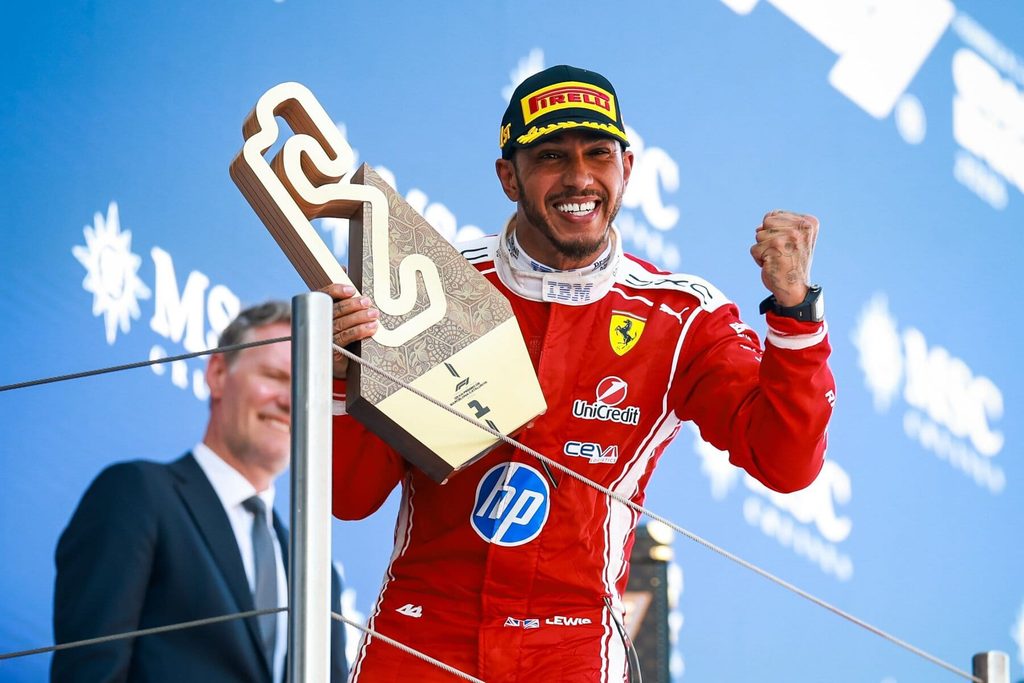
It will also bring to fruition the ambition of seven-time world champion Lewis Hamilton, who has been amongst the most vocal advocates for Formula 1 returning to Africa throughout recent years.
The Ferrari driver has repeatedly questioned the absence of a race on the continent, particularly as Formula 1 has continued to expand into new markets such as the Middle East and the United States.
Speaking ahead of the recent Singapore Grand Prix, Hamilton reiterated the importance of an African race to the sport’s global identity.
“I’ve always said that we need to have a Grand Prix in Africa. For me, it’s the most important continent and the most beautiful continent,” said the 41-year old.
“We’re on all the other continents but that one, and there should be no reason for it. It’s something I’ve been pushing for in the background and Stefano’s been amazing.”
A new chapter for Formula 1 in Africa
The last occasion that Formula 1 raced on African soil was the 1993 South African Grand Prix, won by Alain Prost for Williams at the Kyalami circuit.
South Africa had been a regular fixture on the world championship calendar throughout much of the sport’s history, although the country’s apartheid regime and the subsequent political and commercial complexities saw the event endure periods of absence.
Morocco meanwhile remains the only other African nation to have hosted a Formula 1 world championship Grand Prix, staging a solitary race at the Ain-Diab circuit in Casablanca in 1958.
In the decades since, Formula 1’s calendar has expanded considerably, with new events in Azerbaijan, Saudi Arabia, Qatar, Miami and Las Vegas amongst the additions under Liberty Media’s stewardship.
Though the absence of an African Grand Prix remained a glaring omission for a championship seeking to position itself as a truly global sporting spectacle.
Formula 1 president and CEO Stefano Domenicali described the agreement with Rwanda as a defining moment, highlighting the opportunity to bring the championship closer to an estimated audience of more than 100 million fans across Africa.
“Today is a landmark moment for Formula 1,” said Domenicali.
“With Rwanda joining the calendar from the next decade, our sport will race in every inhabited continent, bringing the World Championship closer than ever to fans around the globe.”
“Africa has always been part of Formula 1’s future, and from the beginning we were determined to return in the right way, with the right partner, a long-term commitment and a clear vision for creating meaningful impact.”
The decision to award Rwanda the event follows years of discussions surrounding a potential return to South Africa, with Kyalami having long been considered the most logical candidate given its historical association with Formula 1.
Proposals for an event in Cape Town had also been floated, though neither ultimately materialised into a formal agreement.
Rwanda meanwhile formally signalled its ambitions in December 2024, when President Paul Kagame announced the country’s bid during the FIA Prize Giving ceremony held in Kigali.
The confirmation of a ten-year agreement now represents a significant breakthrough for the Rwandan government, which has increasingly sought to establish the nation as a destination for major international sporting events.
An ambitious new circuit in Bugesera
Unlike the established Kyalami venue, Rwanda’s Formula 1 ambitions will require the construction of an entirely new facility to FIA Grade 1 standards.
Located near the new international airport development in Bugesera, the circuit will form part of a wider infrastructure, tourism and commercial project supported by the Rwanda Development Board.
The proposed layout has been designed to embrace the region’s natural topography, with considerable elevation changes and a combination of high-speed corners expected to provide a unique challenge for the drivers.
Former Formula 1 driver Alex Wurz has been involved in the design process, alongside the Tilke engineering organisation, with the proposed circuit seeking to incorporate the surrounding hills and lakes into its character.
Amongst the standout features is an elevation change of approximately 197 metres across the lap, as well as a straight exceeding one kilometre in length, culminating in a heavy braking zone to promote overtaking.
A stark contrast to some of the more conventional modern venues, with the designers seeking to create a fast and flowing circuit rather than relying solely on long straights and tight corners.
However, the substantial infrastructure required means that Formula 1’s return remains several years away, with construction milestones and the inaugural race date yet to be formally established.
Rwanda’s President Kagame welcomed the agreement as an opportunity extending beyond the prestige of hosting a world championship Grand Prix.
“This partnership is long overdue,” Kagame said.
“But it is a success and a milestone for the entire continent, especially for the African fans. Ultimately, what we want is for the African Grand Prix to pave the way for other races to be hosted on the continent.”
Questions remain over Rwanda’s selection
While the return of Formula 1 to Africa is undoubtedly a significant milestone, the decision to partner with Rwanda is not without controversy.
The Rwandan government has faced longstanding scrutiny from international human rights organisations, including allegations surrounding political repression and its involvement in the conflict in neighbouring Democratic Republic of the Congo.
Its increasing investment in international sport, including prominent tourism partnerships with European football clubs, has also drawn accusations of sportswashing.
Such concerns will inevitably accompany Formula 1’s expansion into Rwanda, particularly given the championship’s own commitments towards sustainability and promoting positive social outcomes in its host nations.
The involvement of the state-backed Visit Rwanda tourism initiative as title partner for the African Grand Prix further highlights the close relationship between the sporting event and the country’s broader international promotional ambitions.
For Formula 1, it creates another balancing act between commercial expansion and the scrutiny surrounding the political environments in which the championship operates.
Especially as the sport has faced similar criticism over its continued presence in countries with contentious human rights records.
Though from a purely sporting perspective, the confirmation of an African Grand Prix represents the conclusion of a lengthy pursuit to restore a missing piece of Formula 1’s world championship identity.
The question now is whether Rwanda can deliver on the considerable infrastructure and commercial commitments required to bring the event to fruition.
And while South Africa may have appeared the natural destination for Formula 1’s return, Rwanda has ultimately secured the agreement that has eluded the continent for more than three decades.
A historic moment for the sport and its African fanbase, though one where the success of the venture will be measured by far more than simply the spectacle of racing cars taking to the circuit.
